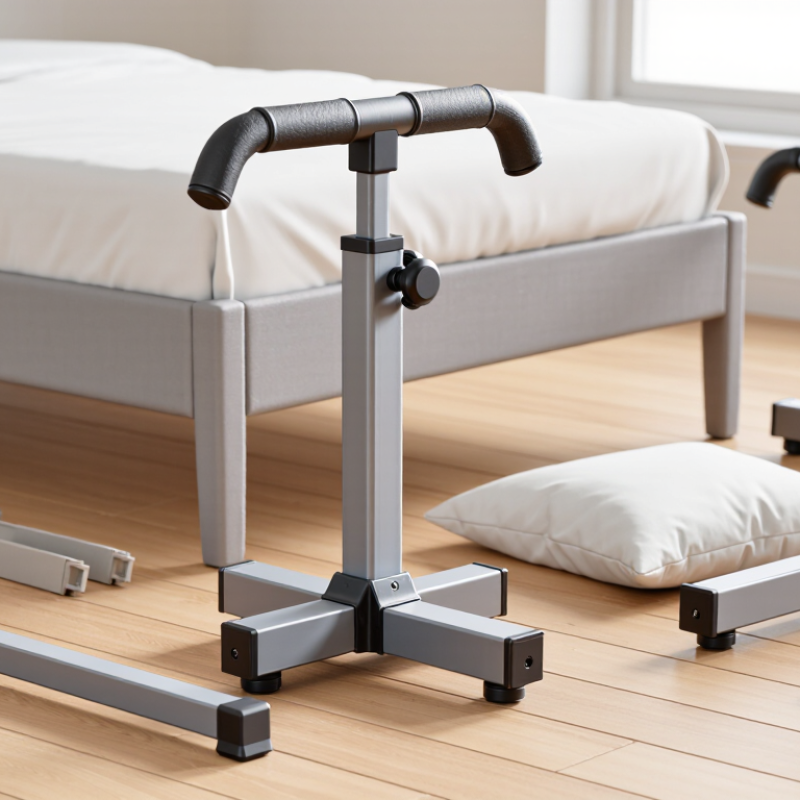
Choosing the right product begins with understanding what to look for in a bedside armrest, not simply finding the lowest factory price in China. A reliable armrest should support standing, sitting, and repositioning beside the bed. It should feel steady under real body weight. Check the frame material, handle diameter, height range, base footprint, and stated load capacity. A wide base may improve stability, but it can also obstruct walking space.
Dr. Alan Hedge, a respected ergonomics researcher, said, “The best posture is the next posture.” This principle matters beside a bed. The armrest should encourage natural movement rather than force the user to twist or lean sharply. Look for padded, easy-grip handles, rounded edges, non-slip feet, and smooth height adjustment. Steel can provide strength, while powder coating may help resist scratches and routine cleaning. However, every finish still needs practical inspection.
Chinese suppliers can offer useful customization, including folding frames, removable cushions, and different rail widths. Ask for dimensional drawings, load testing records, material details, and installation instructions. Request a sample before placing a large order. Small faults become obvious then. A loose joint, weak weld, or slippery foot can change the buying decision. Even expert checklists have limits. A product that suits an older adult may not suit a taller user or a narrow bedroom. Measure the bed, floor clearance, and transfer path carefully. Good sourcing is not only about appearance or certification claims. It is about repeatable stability, clear evidence, and safe daily handling.
China Best Bedside Armrest: What to Look For?
When choosing a bedside armrest in China, start with the user’s movement pattern, not appearance. Fixed armrests provide steady support beside the bed. They suit users who need a dependable handhold during sitting or standing. Check the frame, mounting points, and load rating before installation. A poorly fitted support can shift unexpectedly.
Folding models save space near narrow beds and wheelchairs. Their hinges should move smoothly, lock securely, and resist accidental collapse. Swivel armrests offer a wider transfer path. They can move away from the mattress, then return for support. This design helps when leg movement is limited, but the rotating joint needs regular inspection. Loose hardware is not a minor detail.
Transfer-support designs often include a longer grip or bed-entry handle. They assist with repositioning, sitting up, and controlled transfers. Measure bed height, mattress thickness, and the user’s reach first. I have seen a support look strong yet feel awkward because its handle sat too far away. That mistake is easy to repeat. A qualified healthcare professional should assess fit when balance is poor. Choose padded, easy-clean contact surfaces where skin pressure may occur. Ask for testing records, installation guidance, and replacement-part information. Test the armrest beside the actual bed, if possible.
A bedside armrest should support movement without creating a hidden hazard. For hospital use, check whether the product aligns with IEC 60601-2-52 requirements. This standard addresses safety expectations for medical beds and related equipment. Confirm the applicable edition and local testing requirements. Do not rely on a supplier’s general compliance statement alone. Request test records, product drawings, and inspection dates. A small documentation gap can matter.
Entrapment gaps need careful attention. Check spaces around the armrest, mattress, side rail, and bed frame. A patient’s hand, wrist, neck, or clothing should not become trapped during adjustment. Test the armrest in raised, lowered, and partially locked positions. Real movement can expose risks that a flat showroom inspection misses. This is where many evaluations become too optimistic.
Tips: Use a firm test object to check accessible openings, then repeat the inspection under load. Verify that locking systems engage fully and release only through intentional action. Look for clear indicators, strong hinges, and controls that resist accidental activation. Ask whether staff can operate them while wearing gloves. Test repeatedly. A single successful cycle proves little. Also inspect worn parts after repeated use. My own review habit would include more abuse testing, because clean demonstrations rarely reflect busy wards. A secure armrest should remain stable during transfer, repositioning, and routine cleaning.
China Best Bedside Armrest What to Look For?
A bedside armrest should prove its strength, not only display a rated capacity. During product checks, I examine the frame, mounting points, welds, and fasteners together. A 100-kilogram rating is meaningful only when the complete assembly supports that load safely. Ask whether the rating covers downward pressure, sideways pulling, or both. These forces feel very different beside a bed.
Static strength testing holds a specified load for a controlled period. The armrest should not crack, detach, twist permanently, or become difficult to adjust. The test surface should match real use, including mattress movement and uneven floor contact. Load placement also matters. Pressure near the outer grip can create greater leverage than pressure at the center. Small details matter.
Cycle-life testing reveals weaknesses that one strong pull may miss. A test rig repeatedly raises, lowers, pushes, and releases the armrest. Inspectors should record loosened screws, metal fatigue, plastic wear, and changes in locking action. The required cycle count depends on expected use and applicable safety requirements. Higher capacity does not always mean longer life. I have seen sturdy frames fail at poorly designed joints. That mistake is easy to overlook. Buyers should request test methods, load positions, cycle counts, and failure records, rather than accepting a capacity number alone. Some testing plans may still be imperfect, so clear limitations deserve honest disclosure.
This non-brand benchmark compares three common bedside armrest specifications. Rated capacity is the recommended working load, static strength represents the short-term overload resistance, and cycle life indicates repeated-use durability. A practical target is static strength of at least twice the rated capacity and a cycle life of 30,000 cycles or more.
A bedside armrest should support movement without forcing the wrist into an awkward angle. The 32–51 mm diameter range is a useful ADA-related benchmark for comfortable grasping. It suits many adult hands and allows fingers to close securely around the rail. Too narrow, and the grip feels weak. Too wide, and smaller hands may struggle.
Reach matters just as much as diameter. The armrest should sit close enough for a seated user to grasp without twisting the shoulder. Check the distance from the mattress edge to the rail. A practical test involves sitting on the bed, placing both feet firmly, and reaching with a relaxed elbow. The hand should meet the rail naturally. No stretching.
Small details affect real use. A rounded surface can reduce palm pressure, while a stable frame prevents sudden movement during standing. Measure the bed height, mattress thickness, and available clearance before choosing. In hands-on checks, I have found that users often prefer a slightly lower rail than expected. That is not universal. Body size and mobility change the result.
The 32–51 mm range should guide evaluation, not replace it. Local accessibility requirements may differ. A qualified professional should review installations used for formal care settings. Test the armrest repeatedly, including nighttime use, when visibility and balance may be reduced. Some designs look secure but flex under load. That weakness is easy to miss.
A bedside armrest should support daily movement, not only look stable in photographs. During supplier audits, check whether the factory follows GB/T 19001 procedures consistently. This standard supports controlled processes, documented responsibilities, corrective actions, and continual improvement. It does not automatically guarantee a safe or durable armrest.
Trace one finished armrest backward through its records. The steel or aluminum should connect to a material certificate, heat number, and incoming inspection report. Foam density, coating batch, fastener type, and welding results also need clear identification. Ask to see how one production lot is separated from another. Missing links deserve attention.
QC records should show actual measurements, not copied checkmarks. Review armrest load tests, mounting dimensions, weld appearance, surface finish, and repeated-use testing. Calibration records should match the tools used on the inspection line. Training records matter too. A neat file can hide uneven shop-floor habits. That is the uncomfortable part. Inspect a random unit beside its paperwork. Differences may appear. Request nonconformance reports and corrective action evidence, rather than accepting verbal promises. A reliable supplier can explain who found the problem, what changed, and whether the change worked. Audit notes should remain specific, dated, and easy to verify.
The complete armrest assembly must support the stated load safely. Check the frame, mounts, welds, and fasteners together. Numbers can mislead.
A controlled load should remain for a set period. The armrest should not crack, detach, twist, or become hard to adjust.
Yes. Pressure near the outer grip creates more leverage than pressure near the center. Test both positions.
Repeated raising, lowering, pushing, and releasing can expose hidden weaknesses. Inspectors should check screws, metal joints, plastic wear, and locking action.
No. A strong frame can still fail at a weak joint. This detail is easy to miss.
A diameter between 32 and 51 millimeters suits many adult hands. Smaller hands may struggle with thicker rails.
Sit on the bed with both feet planted. Reach using a relaxed elbow. The hand should meet the rail naturally, without shoulder twisting.
Measure bed height, mattress thickness, rail distance, and nearby clearance. Nighttime testing matters too. Visibility changes everything.
Request test methods, load positions, cycle counts, and failure records. Ask about testing limits. No test plan is perfect.
Choosing the right bedside armrest starts with understanding the available designs, including fixed, folding, swivel, and transfer-support models. The best option should match the user’s mobility needs, room layout, and intended transfer method. When evaluating what to look for in a bedside armrest, prioritize safety features such as appropriate clearance, minimized entrapment risks, secure locking systems, and alignment with IEC 60601-2-52 where applicable. The frame and mounting points should also be assessed for stability and ease of maintenance.
Durability is equally important. Review the rated capacity, static strength, and cycle-life test results rather than relying on appearance alone. Ergonomic details, including a handrail diameter within the ADA benchmark of approximately 32–51 mm, comfortable reach, and accessible positioning, can improve daily usability. For China-based suppliers, examine quality-management certification such as GB/T 19001, material traceability, inspection procedures, and complete QC records. Clear documentation and consistent testing help ensure the armrest is safe, reliable, and suitable for long-term use.

Aura Medical